Jodhpur guide · places
Mandore begins before Jodhpur—and continues beyond its gardens
Earlier-capital geography, memorial architecture, heroes, shrines, museum interpretation and living devotional use occupy one visitor place. They need different evidence and different forms of attention.
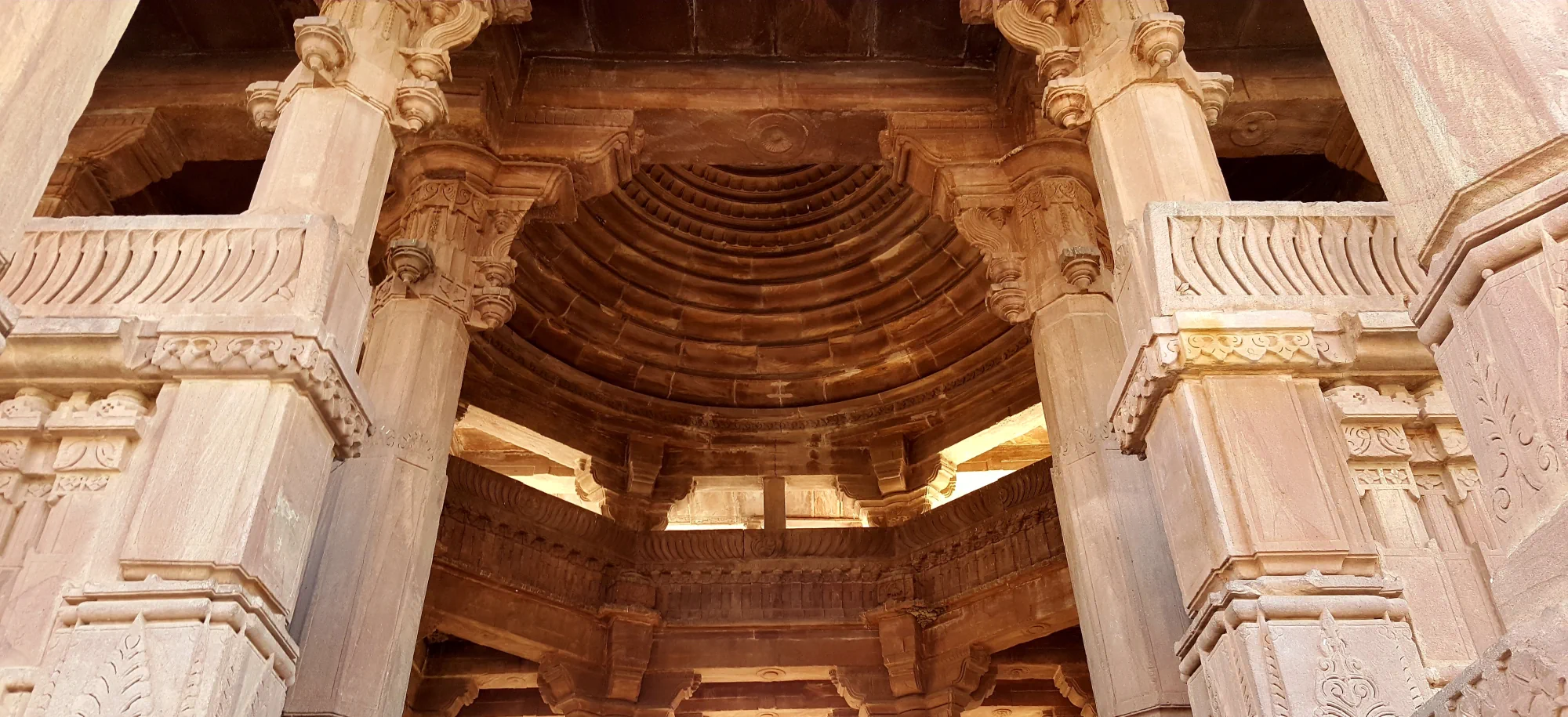
Photograph by Surbhighoghari (opens in a new tab)· CC BY-SA 4.0 (opens in a new tab)
Check before you go
Hours, tickets, schedules, routes and access can change. Use the dated source links below, then confirm time-sensitive details with the responsible operator or venue before you travel.
Before 1459 · Mandore today
Mandore is not a single garden attraction.
Move backward before Jodhpur's foundation, then separate the present grounds into memory, devotion, interpretation and landscape.
Earlier geography
Rathore capital context
Mandore establishes that Jodhpur's foundation transformed an existing political world.
Historical thresholdMemorial form
Architecture and heroes
Structures and displays reveal commemoration without proving every narrated episode.
Identify preciselyDevotional context
Shrine and practice
Present worship remains more important than completing a visitor photograph sequence.
Conduct boundaryVisitor components
Grounds and museum
Open state, separate hours, route and interpretation still require direct checking.
Confirm before travel
What this view cannot showThe layers are a question set, not proof that every component is open. Recorded history, inherited narrative and living devotion are not interchangeable.
Direct answer
Mandore belongs in a deeper Jodhpur visit because the political and spatial story begins before Rao Jodha’s 1459 foundation on the ridge. The Mehrangarh Museum Trust’s history account (opens in a new tab) places the Rathore capital at Mandore before the move to the new fort and city.
The present visitor place is also more than a garden. The Ministry of Tourism overview (opens in a new tab) describes memorial structures, a Hall of Heroes, shrine, gardens and a government museum. Each component needs its own current-status question.
Current visitor snapshot
Checked on 9 August 2026, the national tourism portal publishes 09:00–17:00 visitor hours for Mandore.
Treat that as a dated overview, not as proof that every gate, memorial, hall, shrine area, museum gallery or show follows one schedule or is operating. The page also includes promotional and inherited narrative material that must be attributed rather than silently converted into settled history.
Before building a timed route, confirm component-by-component status, separate tickets if any, closures, interpretation, worship conditions, photography, surfaces, shade, toilets and assistance.
Begin before 1459
Jodhpur’s foundation is a transformation in an existing political geography, not the first page of a blank landscape. Mandore gives the visitor a way to ask what the earlier capital meant and what changed when the new fort and city were established.
That does not make the present grounds an intact model of an earlier capital. Surviving and later memorial structures, museum interpretation, devotional spaces, gardens and modern visitor infrastructure belong to different periods. A responsible guide marks those differences instead of staging a seamless historical reconstruction.
One name, several places
| Component described by official tourism sources | What it may help a visitor understand | What to confirm before visiting |
|---|---|---|
| Gardens and grounds | Present landscape, movement among structures, and the setting of the visitor complex | Entrances, route, maintenance, shade, seating, toilets and current boundaries |
| Memorial architecture | Commemoration, patronage, sandstone form and later relationships with Marwar history | Exact identification, date, interpretation, interior access and conservation condition |
| Hall of Heroes | A form of regional heroic memory and visual narrative | Open state, current displays, interpretive language, photography and access |
| Shrine and devotional contexts | Living belief and the fact that Mandore is not an empty heritage stage | Ritual protocol, open areas, conduct, consent and appropriate specialist and community context |
| Government museum | Institutional interpretation and objects that may connect the earlier capital to wider histories | Official name, operating authority, current hours, ticket, galleries, display state and accessibility |
Five described components are not a promise that five attractions will be available on the visit date.
Keep history, memory and devotion distinct
Recorded and institutional history
Dates, capital relationships, identifiable patrons, structures and public records require appropriate historical or institutional sources. The operator account is valuable, but a complete chronology requires independent specialist sources beyond that account.
Memorial and public memory
Architecture and display can show how rulers, heroes and events have been remembered. Public memory is evidence of remembrance; it is not automatically evidence that every represented episode occurred exactly as later imagery tells it.
Inherited narrative and legend
Inherited narratives may be culturally meaningful and essential to interpreting the place. Attribute them to the source or tradition that carries them. Do not erase them, and do not relabel them as verified event records.
Living devotion
Present worship is not a historical exhibit. Current conduct follows the people and practices present now. Quiet movement, appropriate distance and permission for close photography matter more than completing a content checklist.
Give Mandore a distinct block
Choose Mandore when earlier-capital history, memorial form or living devotional context is a genuine interest. It can form a strong second-day lens because it changes the geography and chronology of the trip.
Do not add it after Mehrangarh, Jaswant Thada, the old city and Umaid Bhawan merely to complete a famous-place list. The transfer, site breadth and exposed movement deserve a separate tested block. A slower Mandore visit may be more complete than a day touching every era without understanding any.
Photograph the present place honestly
The page photograph documents a current-looking view at the time the source image was made. It does not show every component, prove current maintenance, or reconstruct the earlier capital.
Use public visitor space, follow shrine and museum guidance, avoid directing worshippers, and label a structure only after identification is verified. “Mandore” is not a sufficient caption for every red-sandstone frame.
What to confirm before you go
The earlier-capital relationship and the government’s broad component description are sourced. Before visiting, confirm the exact entrance, operating components, separate hours, tickets, museum identity, any show status, ritual protocol, route, shade, seating, toilets, photography, interpretation and assistance. This guide establishes why Mandore matters; current venue information and respectful attention establish how to visit it now.
Sources behind this guide
Follow the sources—and know when to check again.
Official and institutional pages are linked with the date they were checked. They can establish a published fact, but not today's queue, route, access or conditions on the ground.
Source links
Official operator
Mehrangarh history (opens in a new tab)
Mehrangarh Museum Trust
Checked 9 Aug 2026· Current at last check
What this source does not tell you
- An operator history is not an exhaustive independent historiography
- Bardic, devotional, legendary, and commemorative layers require explicit attribution rather than presentation as settled fact
Government source
Mandore visitor overview (opens in a new tab)
Ministry of Tourism, Government of India
Checked 9 Aug 2026· Current at last check
What this source does not tell you
- Promotional and legendary material requires attribution and cannot be flattened into settled historical fact
- The page does not prove which components are currently open, their separate hours, route condition, ritual protocol, show status, or universal accessibility
Government source
Jodhpur destination overview (opens in a new tab)
Department of Tourism, Government of Rajasthan
Checked 13 Aug 2026· Current at last check
What this source does not tell you
- Destination copy is not a substitute for venue-specific hours, prices, access, or current on-ground conditions
- Promotional wording does not independently establish current access or visitor conditions
- Its short reach section does not prove today's routes, operators, schedules, fares, terminal, road time, or last-mile availability
What this guide does not promise
- A claim that every described component, museum, shrine area, or show is operating on the visitor's date
- An exhaustive Rathore chronology, complete religious interpretation, or a claim that every inherited narrative is a documented historical event
Names in this guide
Follow the exact term.
Open the city index for alternate names, clear boundaries, connected subjects and the wider Jodhpur context behind this guide.