Jodhpur guide · food
Mawa kachori: choose the sweet and plan how you will carry it
A dairy-filled sweet can be a memorable finish or a poor passenger through hours of heat. Ask when it was made, what it contains, and how this batch should be stored.
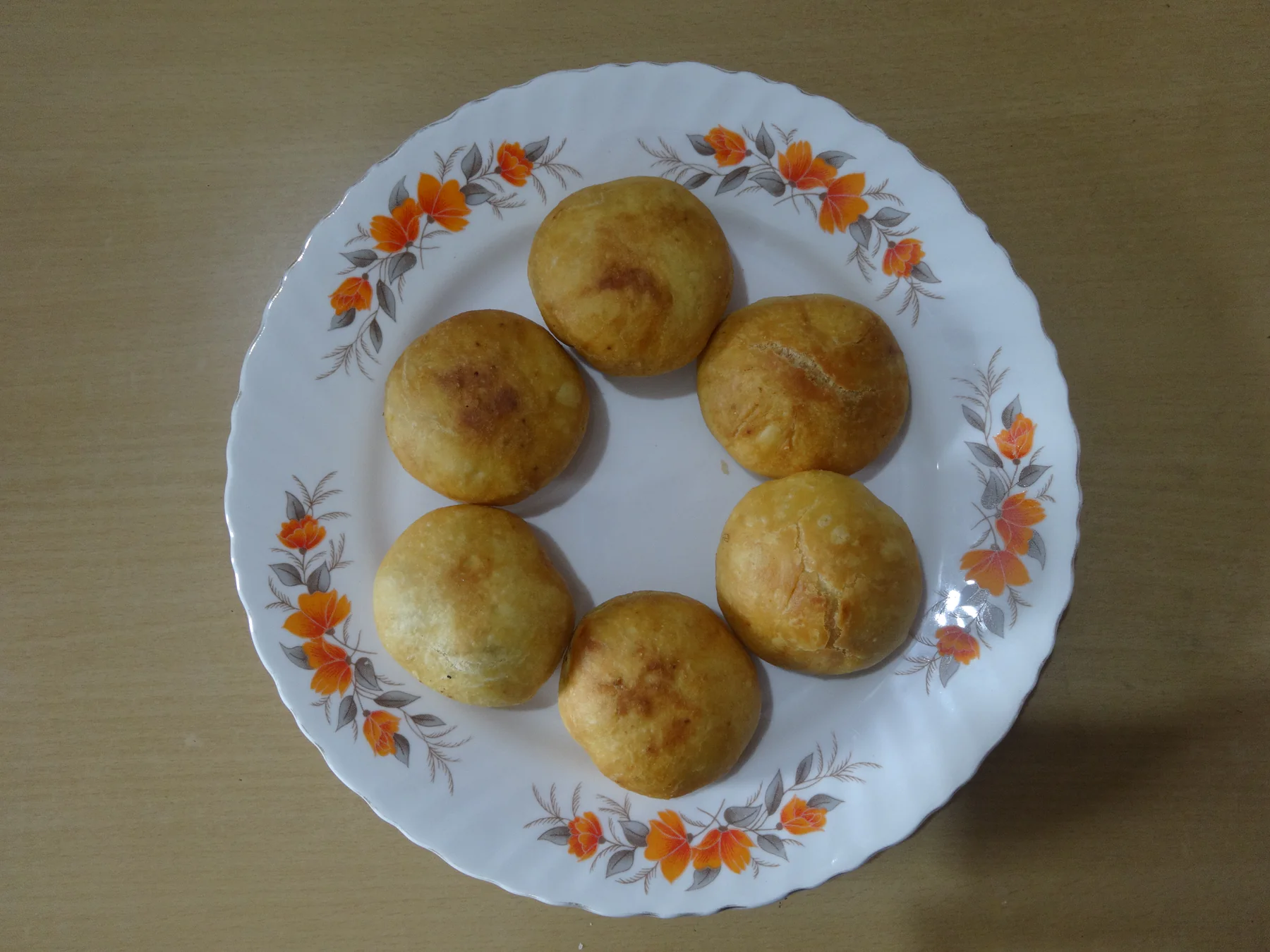
Photograph by Prasant iitd (opens in a new tab)· CC BY-SA 4.0 (opens in a new tab)
Check before you go
Hours, tickets, schedules, routes and access can change. Use the dated source links below, then confirm time-sensitive details with the responsible operator or venue before you travel.
Khoya · sweet pastry · carrying time
Buying is only half the decision. Carrying completes it.
Mawa or khoya makes this a dairy-filled sweet rather than a savoury kachori. Preparation date, display, packaging, route temperature and the maker's storage advice decide whether it belongs in the day's plan.
Identity
Sweet, dairy-filled pastry
Khoya or mawa and sugar move this away from the savoury role of pyaaz kachori.
Broad distinctionAllergens
Milk, nuts and wheat matter
Filling, pastry, ghee, syrup and shared tools require direct questions when allergies or restrictions matter.
Ask the makerStorage
Do not invent a shelf life
Ask when it was made and how that maker says it should be stored; a universal number would be unsafe guesswork.
Maker-specific adviceRoute
Buy near the end
A dairy sweet is a poor companion for an unspecified number of hot hours in a bag or vehicle.
Shorten carrying time
Direct answer
Mawa kachori is a sweet fried pastry filled with mawa or khoya. The Ministry of Tourism’s Jodhpur culinary page (opens in a new tab) also describes dry fruit and sugar syrup in the locally presented form.
That makes it a different decision from pyaaz kachori. Dairy, possible nuts, wheat pastry, fat, syrup, preparation date, display and carrying conditions all matter. There is no honest universal shelf life for every maker, batch, package, season and journey. Ask the maker when it was made and how this product should be stored; buy near the end of a hot route.
Mawa and khoya name the dairy centre
Mawa and khoya are commonly used for concentrated milk solids. In this kachori, that dairy centre moves the food into the sweet course even though the fried pastry shape may resemble a savoury kachori from outside.
The broad distinction is useful:
| Feature | Mawa kachori | Pyaaz kachori |
|---|---|---|
| Main role | Sweet or dessert-like purchase | Savoury breakfast or snack |
| Filling identity | Mawa or khoya, with maker-specific sweet additions | Onion-centred spiced filling |
| Questions that become urgent | Dairy, nuts, syrup, preparation date, storage and carrying | Filling, pastry fat, spice, chutney and shared frying |
| Best place in a route | Eaten now or bought near the end | Eaten as the current savoury stop |
“Best place” here means timing in the day, not a shop ranking.
Ask what the sweetness contains
A sweet exterior or syrup shine cannot reveal every ingredient. Ask about:
- the mawa or khoya and any other dairy ingredients;
- almonds, pistachios, cashews or other dry fruit and nuts;
- wheat flour and other pastry ingredients;
- ghee, butter or another frying or pastry fat;
- syrup, sugar, flavourings and garnish;
- shared oil, trays, knives, tongs, packing surfaces and utensils;
- ingredients or cross-contact relevant to the traveller.
Vegetarian does not mean vegan. “No nuts visible” does not prove a nut-free filling or workspace. When an allergy is serious, use a maker able to provide a clear, specific response and follow the person’s own medical guidance.
Preparation date and storage complete the purchase
Buying a dairy-filled sweet is not complete when payment ends. Ask three more questions:
- When was this batch made? Record the maker’s answer rather than guessing from appearance.
- How should this product be stored? Ask for advice specific to the batch and package.
- When and where will you eat it? Count the real route, vehicle, station, airport, hotel and onward journey—not the journey you hope will be shorter.
Do not translate “people commonly carry it” into a safe duration. Mawa content, moisture, syrup, packaging, ambient heat, refrigeration and handling can differ. A shop’s answer also needs to be plausible for your actual journey and any health needs.
The WHO safer-food principles (opens in a new tab) include safe temperatures and safe raw materials. This page cannot inspect the dairy chain or package. Its duty is to prevent a confident but invented number from replacing current product advice.
Buy late, carry deliberately
If you plan to eat the kachori immediately, choose a clean serving context and ask the ingredient questions first. If you plan to carry it:
- buy after the day’s exposed walking rather than before it;
- reduce the time between purchase and suitable storage;
- keep the package protected from crushing, direct sun, dirty surfaces and unknown vehicle heat;
- do not assume a hotel room, luggage compartment or parked car is cool;
- keep the maker’s storage instruction and purchase date with the package;
- reconsider the purchase when the onward journey is uncertain.
This is not a substitute for tested product labelling or professional food-safety advice. It is a route rule: shorten avoidable warm carrying time.
Packaging is evidence only of packaging
A sealed-looking box does not establish sterilisation, refrigeration, tamper evidence, shelf stability or suitability for air travel. Ask what the package is designed to do. Check airline, rail, customs or destination rules through the responsible authority when the journey crosses a relevant boundary.
The guide does not promise that a shop can courier the sweet, that an airline will accept it, or that a recipient should eat it after an unspecified journey. Those are separate current decisions.
The hero photograph is intentionally limited
The photograph on this page is a real image whose creator labels the food khoya kachori. The source does not identify Jodhpur, a maker, a filling cut section, syrup, preparation time or storage condition. It therefore cannot serve as evidence for the appearance of Jodhpur’s mawa kachori.
The image is used as a broad visual comparison: round fried pastries labelled with a related dairy-filled name. The page’s actual Jodhpur association comes from the linked Ministry of Tourism source, not from the photograph. This separation is more important than pretending to have a perfectly matched local image.
No shop is endorsed, and no local product is represented as photographed when it was not.
Origin and exclusivity need stronger evidence
The national tourism portal presents mawa kachori as part of Jodhpur’s food identity and uses exclusivity language. This guide takes the narrower, supportable position: mawa kachori is publicly associated with Jodhpur and deserves a local visitor guide.
That does not prove a first inventor, first shop, date of origin or exclusive right to every khoya-filled kachori. A serious historical claim needs dated culinary records or specialist research beyond promotional repetition.
Decide whether the day actually needs it
After mirchi bada, pyaaz kachori and a rich lassi, appetite may already have answered. The food guide treats mawa kachori as the sweet role, not a mandatory fourth stop.
Choose it when the group wants a dairy sweet and the route can support eating or storing it. Remove it when allergies are unclear, the package will sit in heat, the onward plan is unstable, or the only reason is to complete a famous-food list.
What to confirm before buying
Ask about today’s preparation time, mawa or khoya, other dairy, nuts, flour, fat, syrup, shared tools, packaging, storage instruction, current price and the realistic carrying route. Follow advice for the actual product. Do not rely on a photograph, popularity or an undated shelf-life claim.
Sources behind this guide
Follow the sources—and know when to check again.
Official and institutional pages are linked with the date they were checked. They can establish a published fact, but not today's queue, route, access or conditions on the ground.
Source links
Government source
Exploring the Gastronomic Delights of Jodhpur (opens in a new tab)
Ministry of Tourism, Government of India
Checked 9 Aug 2026· Current at last check
What this source does not tell you
- Promotional destination copy does not prove that Jodhpur invented a dish, that one recipe is universal, or that a named venue is authentic, safe, open, or preferable
- Ingredient lists, spice, portion, oil, dairy, nuts, accompaniments, and preparation can vary by maker and must be asked about directly when they matter
Institutional source
Five keys to safer food (opens in a new tab)
World Health Organization
Checked 9 Aug 2026· Current at last check
What this source does not tell you
- The guidance does not inspect, certify, rank, or guarantee any Jodhpur vendor or individual serving
- General food-safety guidance cannot replace medical advice or individual allergy, pregnancy, age, immunity, and dietary precautions
What this guide does not promise
- A universal shelf life, storage temperature, recipe, allergen statement, health claim, or guarantee that every product travels safely
- A best-shop list, current price or hours, courier or airline acceptance promise, kitchen inspection, or origin claim based on repetition
Names in this guide
Follow the exact term.
Open the city index for alternate names, clear boundaries, connected subjects and the wider Jodhpur context behind this guide.