Jodhpur guide · planning
The best Jodhpur season depends on what you want to do outside
Cooler walking months are the easiest default, but shoulder months, monsoon conditions, event dates, light, crowds, and a traveller's heat tolerance can change the right choice.
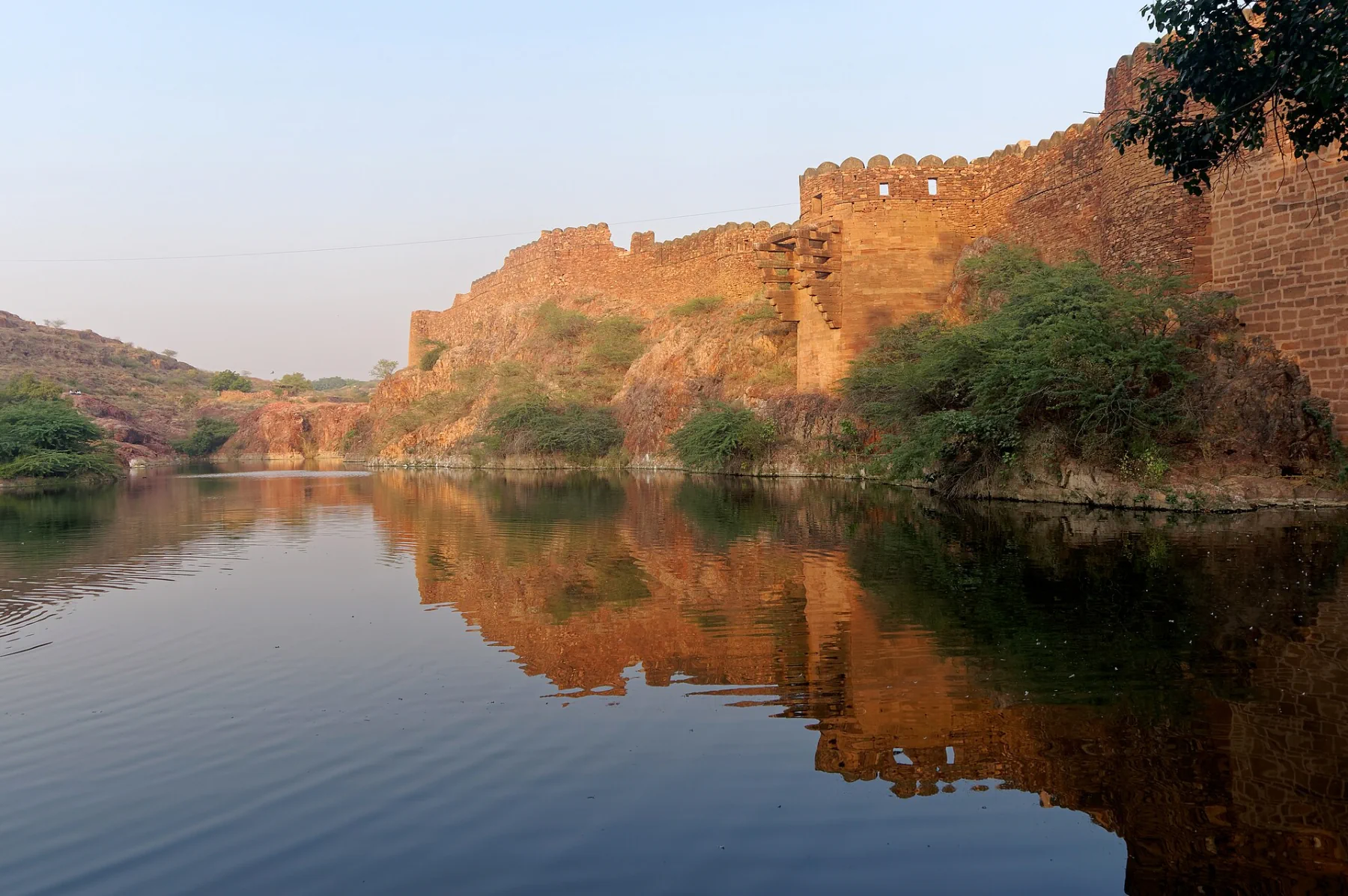
Photograph by Jakub Hałun (opens in a new tab)· CC BY-SA 4.0 (opens in a new tab)
Check before you go
Hours, tickets, schedules, routes and access can change. Use the dated source links below, then confirm time-sensitive details with the responsible operator or venue before you travel.
Direct answer
For a first visit built around walking, monuments, markets, and exposed viewpoints, November through February is the easiest default. The India Meteorological Department’s 1991–2020 Jodhpur station normals report mean daily maxima of 31.8°C in November, 27.5°C in December, 25.1°C in January, and 28.4°C in February. Mean daily minima for those months are 15.1°C, 11.1°C, 9.6°C, and 12.5°C respectively.
Those numbers describe a thirty-year climate normal at one station. They do not predict a specific day, guarantee comfort, or replace health advice. Pair them with a live forecast close to travel and with route-specific exposure information.
Month groups that change the trip
| Period | IMD normal signal | Planning consequence |
|---|---|---|
| November–February | Lowest mean temperatures of the year; very low mean rainfall | Best default for longer outdoor days; mornings and nights can still feel cool |
| March | Mean maximum 33.9°C | Start exposed sections earlier and preserve afternoon recovery time |
| April–June | Mean maxima 38.7–41.2°C; May mean maximum 41.2°C | Peak-heat strategy: reduce exposed walking, use early blocks, and avoid schedule pressure |
| July–August | Mean maxima 36.0°C and 33.8°C; highest mean monthly rainfall, 119.7 mm and 113.5 mm | Lower maxima than peak summer do not mean dry or predictable walking conditions |
| September–October | Mean maxima 35.2°C and 36.1°C; rainfall declines sharply by October | Shoulder strategy; heat remains material even when event season begins |
Do not turn the table into a “weather score.” Heat, direct sun, humidity, wind, rain, surfaces, shade, clothing, age, health, and acclimatisation affect people differently.
Winter: easiest, not automatically empty or cheap
November through February supports the longest walking windows and the gentlest default itinerary. It is also likely to attract strong demand, but crowd and hotel-price levels are not estimated here without current inventory data. Check important stays and events in advance without treating any universal booking deadline as fact.
March and October: shoulder months with real heat
March and October can reward visitors who want longer light and can adapt the day. The climate normals still show mean daily maxima near 34°C and 36°C. “Shoulder season” must not be used as a euphemism for mild weather. The itinerary should move exposed fort, park, or market walking earlier and keep an indoor or rest option for the hottest block.
April to June: redesign the day
The issue is not that Jodhpur becomes unvisitable; it is that a winter itinerary becomes irresponsible when copied unchanged. Reduce the number of exposed stops. Begin early where official opening hours permit. Protect hydration, shade, meals, and recovery. Do not promise that a private car removes heat exposure inside monuments, markets, parks, or approach paths.
This guide can explain itinerary design and point to official weather or health information; it cannot decide whether heat is safe for an individual.
July to September: rain changes reliability
The IMD normal shows the largest mean rainfall in July and August, with mean maxima below May–June levels. This can change light, landscape, dust, trail conditions, road reliability, and outdoor scheduling. It does not justify a romantic “monsoon magic” claim without current observations and weather warnings. Rao Jodha Desert Rock Park or other exposed landscapes need venue-specific condition checks.
Events: verify the programme, not just the festival name
Rajasthan Tourism currently lists the Marwar Festival for 24–25 October 2026. A separate programme page, despite a 2026 update stamp, still exposes detailed 2018 timings. That conflict is itself important evidence: use the current date listing cautiously, and do not build a route around venues or times until a current event-specific programme is confirmed.
What to confirm before you go
Check the live forecast, official warnings, venue notices and event programme for your dates. Use the climate normal to understand the broad pattern, then adapt the daily rhythm to the actual weather, route exposure and people travelling. No single month is “perfect” for everyone.
Sources behind this guide
Follow the sources—and know when to check again.
Official and institutional pages are linked with the date they were checked. They can establish a published fact, but not today's queue, route, access or conditions on the ground.
Source links
Government source
Climatological Information: Jodhpur station 42339, period 1991–2020 (opens in a new tab)
India Meteorological Department, Meteorological Centre Jaipur
Checked 9 Aug 2026· Historical dataset
What this source does not tell you
- The table is a 1991–2020 climate normal, not a forecast for a visitor's dates
- Station conditions do not describe every street, indoor space, or individual heat response
Government source
Rajasthan fairs and festivals listing for Marwar Festival 2026 (opens in a new tab)
Department of Tourism, Government of Rajasthan
Checked 9 Aug 2026· Mixed currentness
What this source does not tell you
- A separate programme page updated in 2026 still exposes a detailed 2018 schedule
- Venue-level programme and timings require a current event-specific confirmation before itinerary use
Government source
Jodhpur destination overview (opens in a new tab)
Department of Tourism, Government of Rajasthan
Checked 13 Aug 2026· Current at last check
What this source does not tell you
- Destination copy is not a substitute for venue-specific hours, prices, access, or current on-ground conditions
- Promotional wording does not independently establish current access or visitor conditions
- Its short reach section does not prove today's routes, operators, schedules, fares, terminal, road time, or last-mile availability
What this guide does not promise
- A forecast for a specific future trip or a medical heat-safety assessment
- Claims about exact crowd size, hotel price, or air quality without current measured data
Names in this guide
Follow the exact term.
Open the city index for alternate names, clear boundaries, connected subjects and the wider Jodhpur context behind this guide.